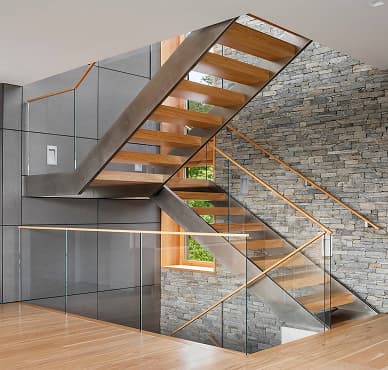
Japandi Interior Design for Pune Homes (2026): The Calm, Warm-Minimal Trend That Actually Suits Indian Flats
Key Takeaways
- Japandi = Japanese minimalism + Scandinavian warmth. Calm, uncluttered, warm-toned — neither cold-minimal nor heavy-traditional.
- Three-tone palette only: warm off-white walls + one light-to-mid wood + one grounding dark used sparingly.
- Pune material adjustment: engineered oak/birch laminate on BWP marine-grade ply — survives 80%+ monsoon humidity.
- Lighting rule: 2700K warm white everywhere, three sources per room. No cool 6500K anywhere.
- Japandi turnkey cost in Pune (2026): ₹4.5–6.5L for 1BHK, ₹6.5–10L for 2BHK, ₹11–16L for 3BHK.
Japandi has been the most-searched interior style of the last 18 months — Pinterest's 2025 trend report flagged it, Indian design publications have run cover stories on it, and we have been getting Japandi briefs from clients in Kharadi, Baner, Kalyani Nagar and Koregaon Park almost every week in 2026. It is the rare design trend that earns its hype.
So what is it, why is it spreading so fast in Pune, and — practically — how do you do it in an Indian apartment without it looking like a stage set? Here is what we have learned executing Japandi homes across the city this year.
What Japandi actually is (and isn't)
Japandi is the hybrid of two design traditions:
- Japanese minimalism — restraint, low-profile furniture, the wabi-sabi appreciation of imperfect natural materials, lots of negative space.
- Scandinavian warmth — light woods, cosy textiles, soft daylight, functional craft and a strong "hygge" feel.
Where pure Japanese minimalism can read as cold or austere in an Indian context, and pure Scandi can feel a little chilly in our climate, Japandi sits at the warm centre — uncluttered but not empty, minimal but not sterile, modern but not corporate. That is the reason it is winning over Pune homeowners who like the calm of minimalism but want their living rooms to feel like home.
Why Japandi is exploding in Pune in 2026
Four reasons we hear repeatedly from clients this year:
- Compact-flat fit. The style insists on fewer pieces and full-height storage — exactly what 600–1,200 sq ft Pune apartments need.
- Wellness focus post-2020. After years of WFH, people want their homes to feel calm and uncluttered, not Instagram-busy.
- Light tone, bright photos. Pune's strong daylight pairs beautifully with warm off-whites and light wood — the homes simply photograph better.
- Material availability has caught up. In 2026, engineered light-oak laminates, cane, linen blends and stoneware ceramics are easy to source in Pune — they were not in 2020.
10 Japandi ideas, tuned for Pune flats
1. Lock in a three-tone palette and stop
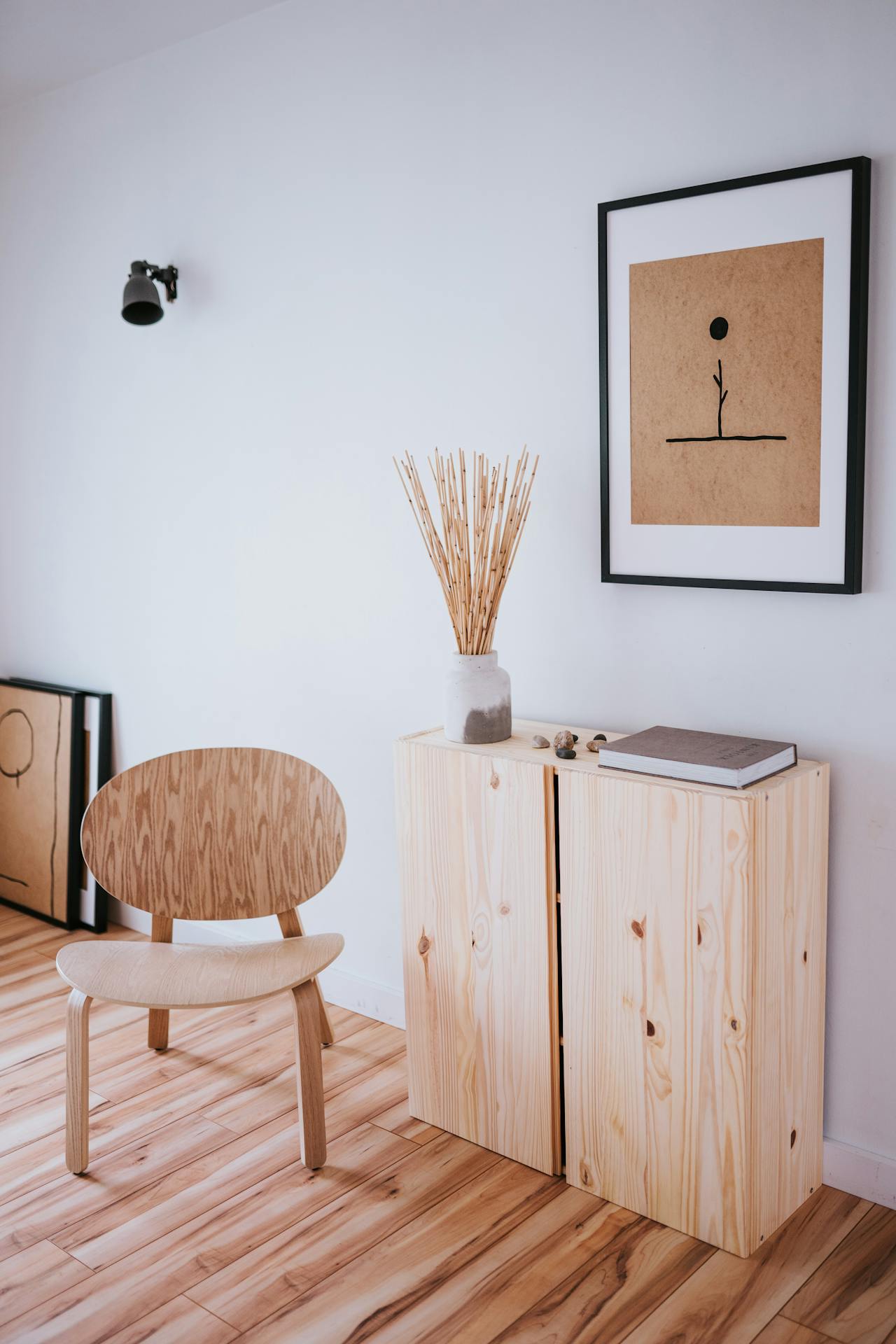
Japandi is a discipline of restraint. Pick (a) one warm off-white for walls — old lace, ivory, soft mushroom — (b) one light-to-mid wood tone for major furniture, and (c) one grounding dark — charcoal, ink black or deep clay — used sparingly on hardware, picture frames and one statement piece. No bright accents, no second wood tone, no patterned wallpaper. The restraint is the point.
2. Go low — beds, sofas and consoles closer to the floor
Lower furniture heights make ceilings feel taller and rooms feel calmer. Choose a platform bed (200–250 mm off the floor instead of 450 mm), a sofa with a lower back, and a console at coffee-table height. This is the single visual move that most reads as "Japandi" vs. ordinary modern.
3. Pick warm, light wood — but the right grade for Pune
Light oak, ash and birch are the Japandi woods. In a Pune apartment with humid monsoons, we usually specify engineered oak / birch laminates on marine-grade BWP ply rather than solid wood — same look, far more reliable in 80%+ humidity. For details on the carcass material itself, see our HDF vs BWP vs Marine Ply Pune kitchen guide — the same logic applies to wardrobes and TV units.
4. Negative space is a design choice, not laziness
In Japandi, the empty wall behind the sofa is the design. Resist the urge to fill it with a gallery wall, large clock and floating shelves. One framed piece of muted art, off-centre, is enough. The eye needs somewhere to rest — that is where the calm comes from.
5. Layered, warm 2700K lighting — no cool white anywhere
Single ceiling tube + cool 6500K downlights = the Japandi-killer. Switch every fixture to 2700–3000K warm white, and use three sources per room: a peripheral cove (warm), one task light over dining or reading, and one floor or table lamp at sofa height. Paper-shade pendants in the dining area are a Japandi signature; we use them in most projects.
6. Bring in natural texture — cane, linen, jute, ceramic
To stop a warm-neutral room from feeling flat, lean on texture, not colour. A cane-back dining chair, a chunky linen cushion, a jute rug, a hand-thrown stoneware vase — none of these add colour, all of them add depth. We typically aim for 4–5 distinct natural textures per room.
7. One sculptural plant per room — not a jungle
Japandi loves plants but treats them like sculpture: one rubber plant or fiddle-leaf fig in the living, one snake plant in the bedroom, a small bonsai or single stem in a stoneware vase on the dining table. Skip the wall of pothos vines and shelf-full of succulents — that is a different aesthetic.
8. Hidden, full-height storage along one wall
Clutter is the enemy of Japandi. We design one full-height storage wall per room — wardrobe in the bedroom, TV + crockery wall in the living, full-height pantry in the kitchen — in a finish close to the wall colour so it visually recedes. Internal organisers do the heavy lifting; the outside stays calm. This is also a small-flat workhorse, which is why it shows up in our 1BHK ideas guide too.
9. Soften the floor — mid-tone wood or warm porcelain, never glossy
High-gloss vitrified floors fight everything else in a Japandi room. If you can change the floor, use a matt mid-tone wood-look porcelain plank (600 × 1200 mm) or engineered wood. If you can't, a large undyed wool or jute rug under the main seating reframes the room without a single tile lifted.
10. Curate, then curate again
The final 10% is editing. A few weeks after the project handover, go through every shelf and surface and remove a third of what is on it. Then do it again two weeks later. The homes that read most "Japandi" in our portfolio are not the ones with the most pieces — they are the ones where the client was willing to take things away.
What a Japandi turnkey actually costs in Pune (2026)
Japandi is not an expensive style in itself — it leans on fewer-but-better pieces, restrained material palettes and lighting design. Here is the range we are quoting in Pune this year:
| Flat size | Approx. Japandi turnkey cost (2026) | Where the budget goes |
|---|---|---|
| 1BHK (450–650 sq ft) | ₹4.5 – ₹6.5 lakh | Full-height storage, modular kitchen in light-oak laminate, peripheral cove lighting, one statement paper pendant |
| 2BHK (700–1,000 sq ft) | ₹6.5 – ₹10 lakh | Above + low-profile bed, linen upholstery, cane dining chairs, layered lighting design across rooms |
| 3BHK (1,000–1,500 sq ft) | ₹11 – ₹16 lakh | Above + engineered-wood flooring in living, full lighting plan with dimmers, curated soft furnishings |
For a deeper line-item breakdown of standard (non-Japandi) interior packages, our 2BHK interior design cost in Pune (2026) guide has the full numbers.
What to skip in a Pune Japandi home
- High-gloss laminates and PU finishes. Japandi reads matt. If you must have sheen, use a low-gloss (10–20%) PU at most.
- Two different wood tones in the same room. Pick one and stay with it; the moment a darker walnut walks into a light-oak room, the calm breaks.
- Cool 6500K lighting. Japandi cannot survive cool white. Replace every fixture to warm 2700K, including kitchen and bathrooms.
- Heavy curtains. Use sheer linen-look fabric or warm off-white blinds. Heavy velvet or layered drapery belongs in a different style.
- Glossy marble or printed quartz with heavy veining. Choose Indian engineered stone in soft beige / warm grey, or matt-finish granite, instead.
"Japandi is not about empty — it is about chosen. Every piece earns its place, or it goes."
Krafts by Omkar Designs
Where Japandi is taking off in Pune
We are getting the most Japandi briefs out of the following areas — usually from working professionals in their late 20s to mid-40s, often in their first or second owned home:
- Interior designer in Kharadi — EON IT Park / Marvel / Gera buyers
- Interior designer in Baner — premium 2/3BHKs, Japandi is a top-3 ask
- Interior designer in Kalyani Nagar — high-rise apartments, where the style pairs well with floor-to-ceiling glass
- Interior designer in Koregaon Park — older bungalows getting a calm, contemporary refresh
- Interior designer in Viman Nagar — Clover / Lunkad / Konark high-rises
- Interior designer in Wakad — IT-corridor first homes
Planning a Japandi home in Pune?
At Krafts by Omkar Designs, we have executed Japandi-leaning interiors across Pune in 2025 and 2026 — from 1BHKs in Kharadi to 3BHKs in Baner. We handle layout, 3D visualisation, modular execution, lighting design and final styling under one roof, with transparent pricing.